

Lime Mortar vs Cement Mortar for Historic Brick
Lime mortar vs cement mortar for historic brick: why soft lime mortar protects old brick, how hard cement causes damage, and how to tell which you have.
 By the All American Dream Homes team · 6 min read · Updated November 2026
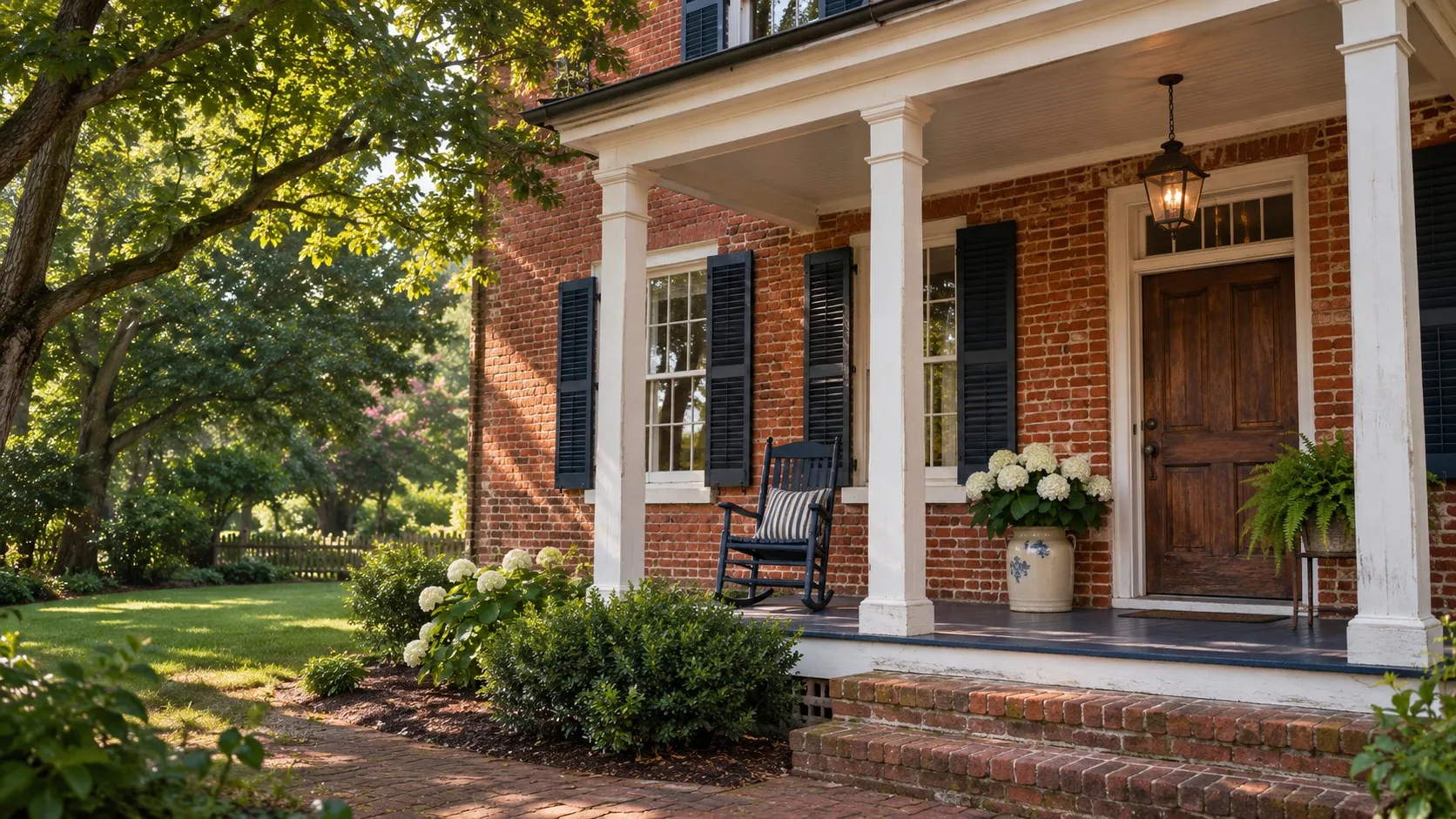
Historic brick should usually be repointed with lime-based mortar, not hard Portland cement mortar. Mortar should be softer and more breathable than the brick around it, so that moisture and movement are taken up by the replaceable joint instead of cracking or spalling the brick.
Key takeaways
- 1Mortar is meant to be the sacrificial part of a brick wall.
- 2Hard cement mortar in soft historic brick traps moisture and damages brick faces.
- 3Match the original mortar in strength, color and joint profile.
Why mortar must be softer than brick
Older handmade brick is softer and more porous than modern brick. Walls breathe: moisture moves through them and out through the joints. Lime mortar allows that, and it flexes slightly as the wall moves with temperature.
Hard cement mortar does neither. Water exits through the brick instead, and freeze-thaw cycles break off the brick faces, a problem called spalling.
How to tell what your wall has
Lime mortar is usually softer, can often be scratched with a key, and has a lighter, sandier look. Previous repairs with grey, hard cement mortar are common on Virginia homes and often stand out visually.
Planning a project like this?
We are licensed and insured, and every estimate is free. Heritage Restoration across Virginia.
How we repoint historic brick
Deteriorated joints are raked out by hand or with careful tools to a consistent depth, then refilled in layers with a mortar matched to the original. See historic masonry repointing for how we approach it.
Verify with official sources
Rules and programs change. Check current details with:
Related questions
Portland cement came into wide use in the late 1800s and early 1900s. Many earlier buildings were built with lime mortar.
Generally yes, when the brick is soft. The National Park Service recommends mortar that is no harder than the original.
Joints that are crumbling, recessed or cracked, or that let water in, are due for repointing.
Still have questions?
Talk to us directly, Monday-Friday, 7am-7pm, or request a free estimate.
Call (804) 497-0068Related guides
All renovation guides- Historic homes
Virginia Historic Rehabilitation Tax Credit
Virginia's historic rehabilitation tax credit is a state income tax credit for qualifying rehabilitation of a certified…
7 min read - Permits and rules
Renovating in Richmond's Historic Districts
If your home is in one of Richmond's City Old and Historic Districts, most exterior changes visible from the street…
7 min read - Historic homes
Lead-Safe Renovation in Pre-1978 Homes
If your home was built before 1978, federal EPA rules require renovation work that disturbs painted surfaces to follow…
6 min read
Talk to us about heritage restoration
Tell us about your home and what you want to change. We will set up a visit and give you a free, written estimate.